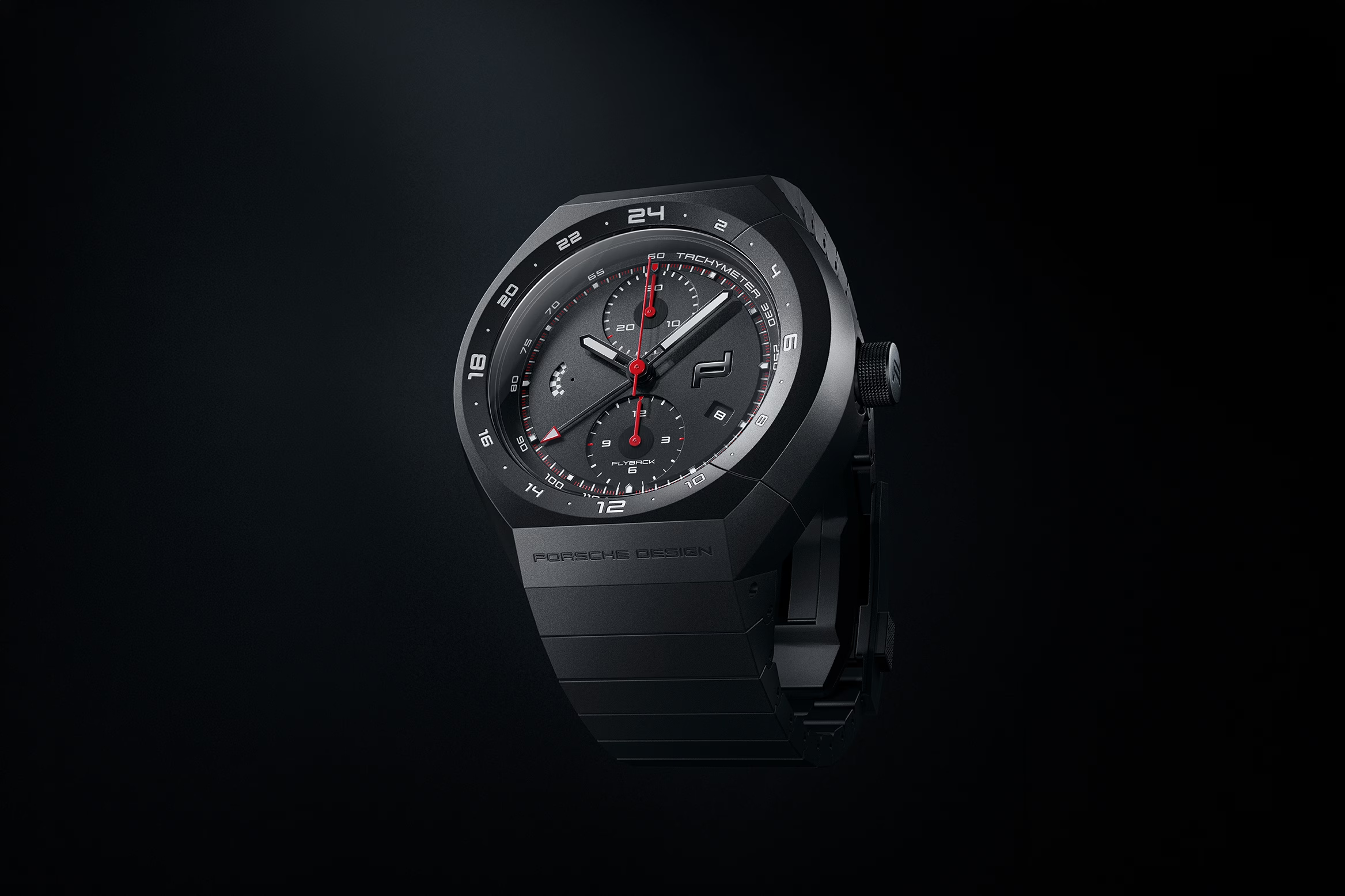
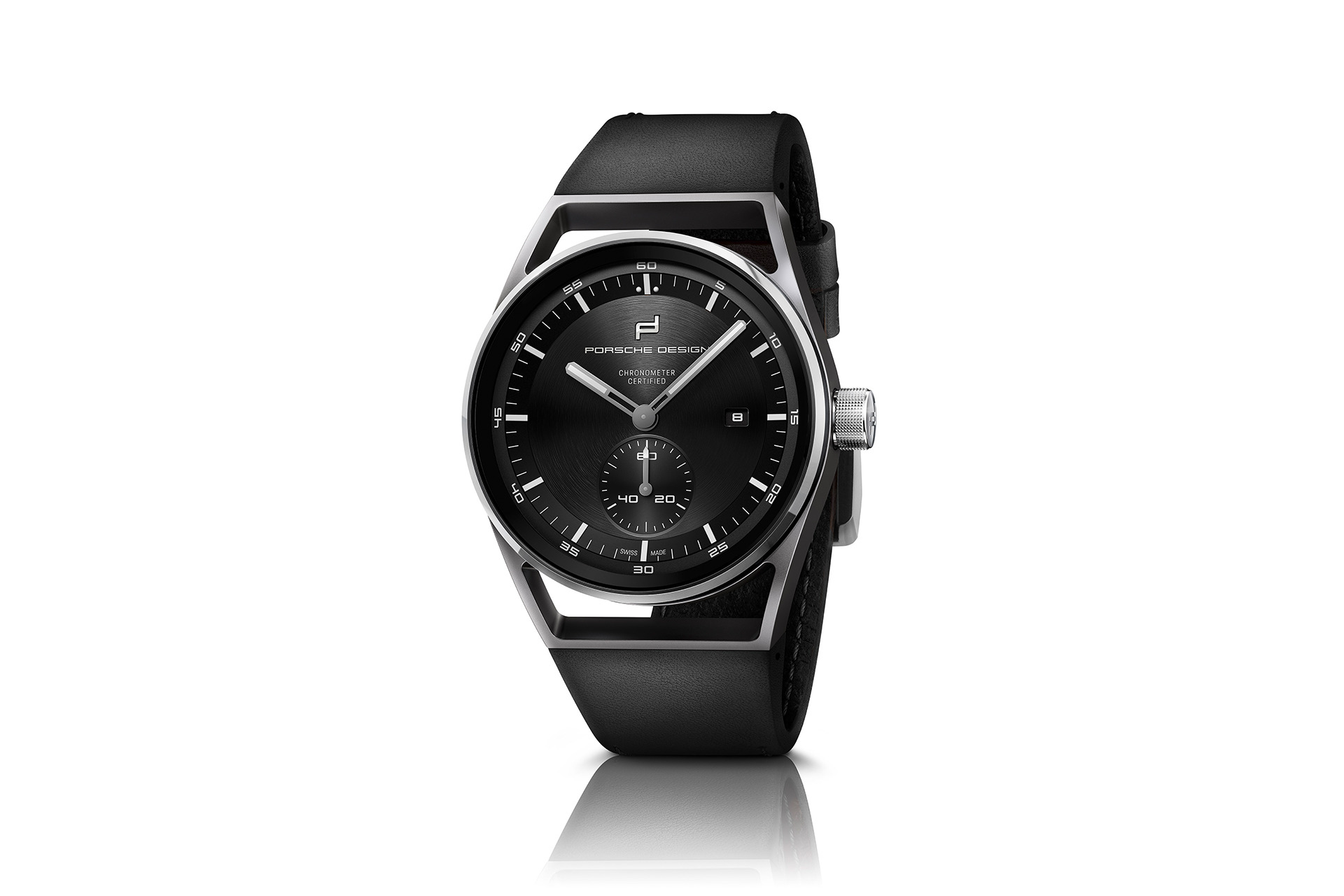
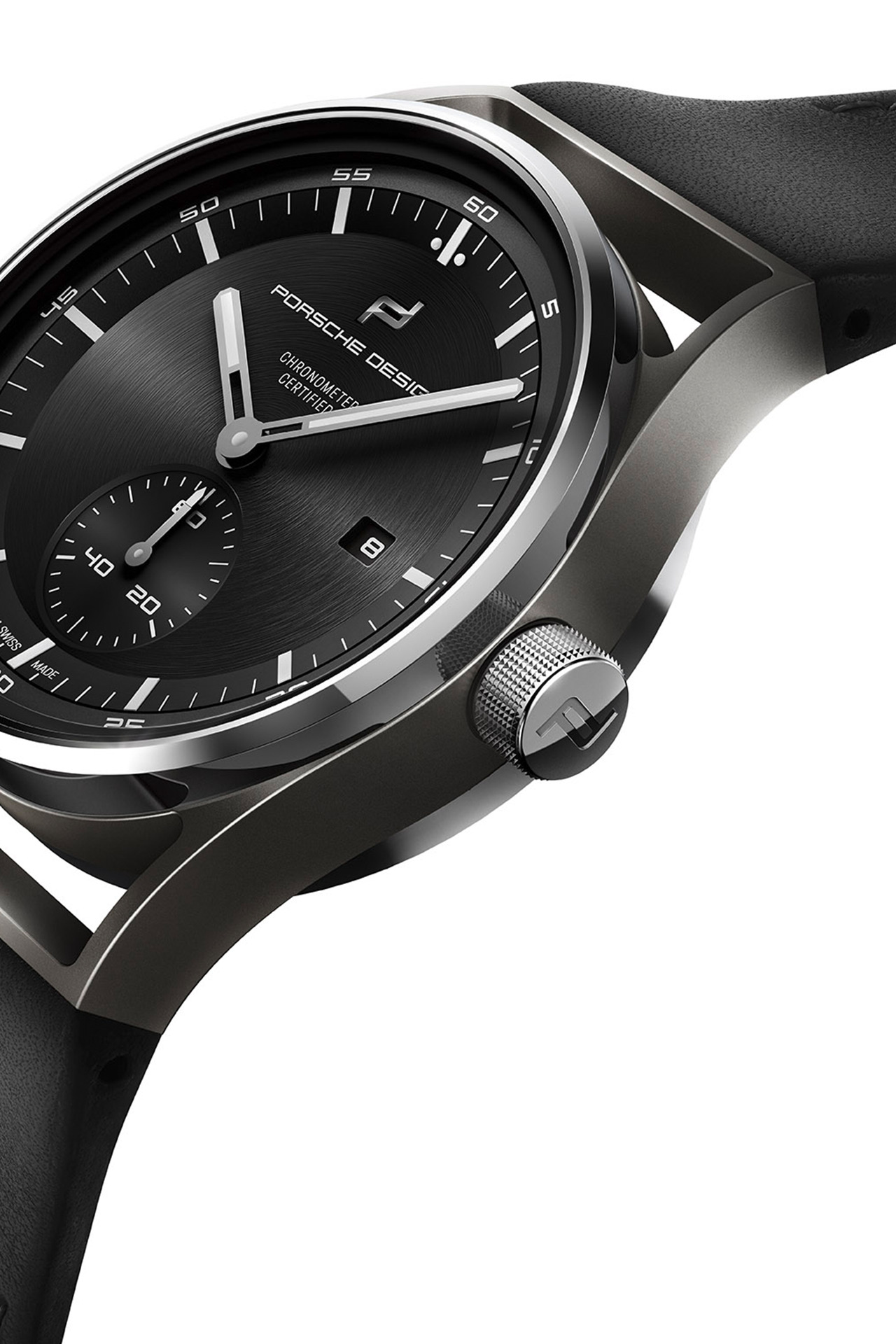
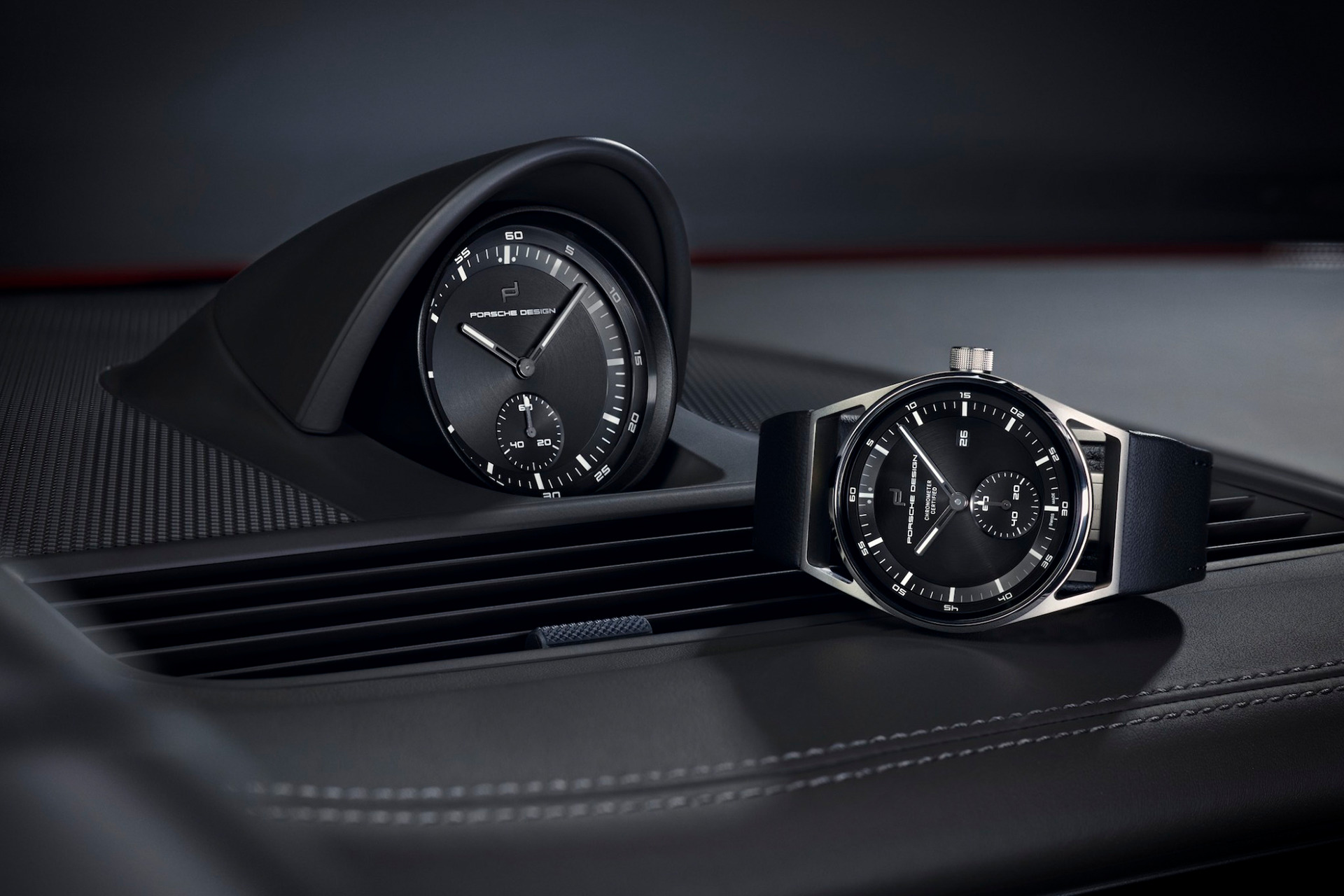
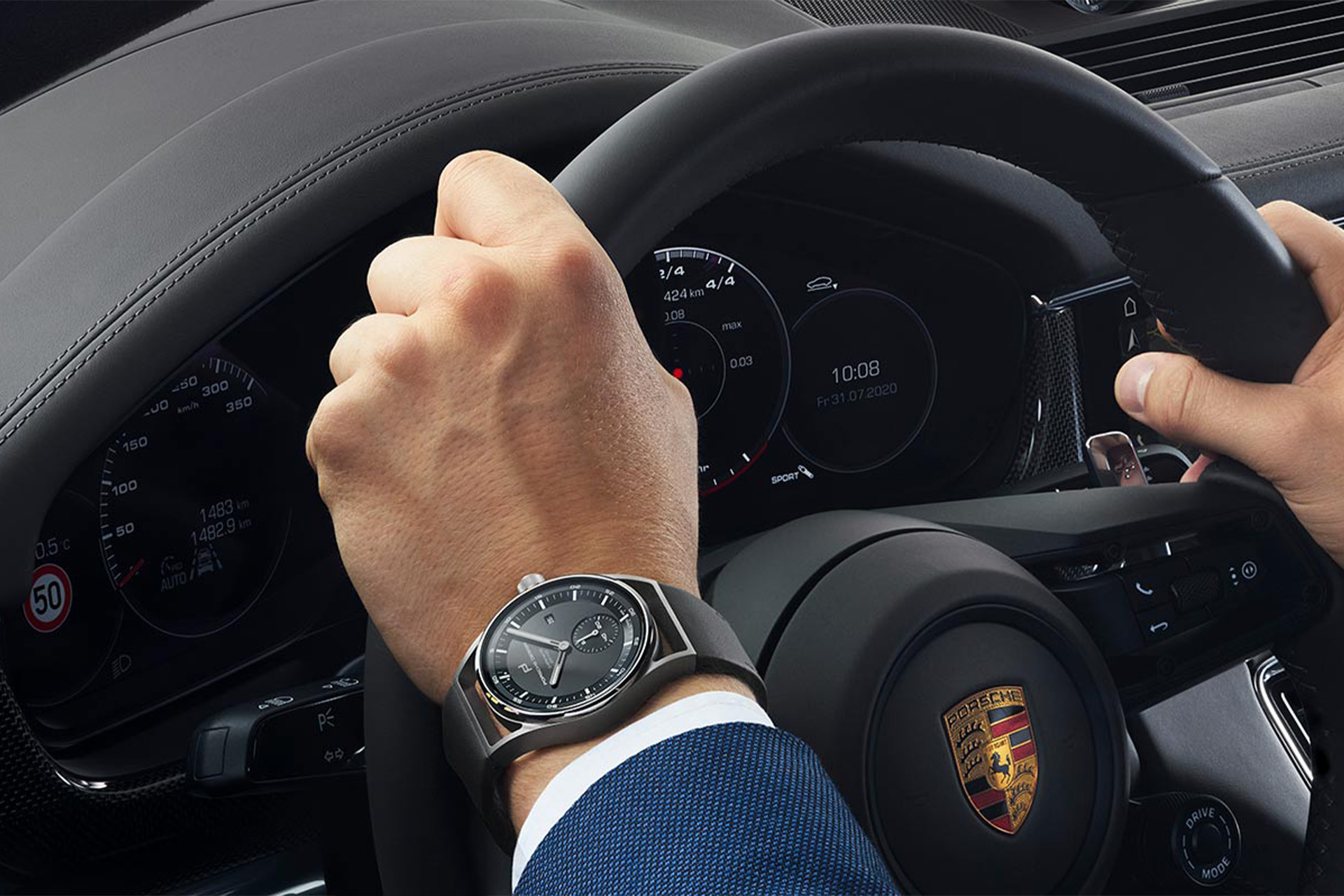
Preserving and evolving the design legacy of F. A. Porsche is very important to us; it forms the conceptual foundation of our work. The belief that a product’s function should be at the center, and that reduction and a focus on its essence are key to design, feels more relevant and necessary today than ever. Above all, a watch must first and foremost be precise in timekeeping, unambiguous in readability, and ergonomic in use. The Sport Chrono Subsecond follows exactly this approach, resulting in an appearance that is purist but not banal, functional but not devoid of emotion. The distinctive and clear lines of the titanium case, as well as the structured layout of the dial, are strong examples of this and trace back to the ideas of F. A. Porsche, who once expressed it as: “If you consider the function of an object, its form sometimes emerges on its own.”
The Sport Chrono Subsecond adheres to this principle and is organized according to a hierarchy of information based on functional priorities. The hour indices are designed as large, rectangular elements, referencing the broad, rectangular Super-LumiNova of the hour hand and creating a formal connection between index and hand. This allows one of the primary pieces of information—the hour—to be read quickly and intuitively, almost subconsciously, enabling focus on the often even more critical information: the minute. As the minute hand is positioned above the hour hand and therefore sits further from the dial, the minute indices are placed along the upper edge of a chamfer, running as closely as possible beneath the minute hand. This positioning avoids parallax and ensures the most precise readability of the current minute. The running seconds are positioned at 6 o’clock, forming a visual counterpart to the lettering at 12 o’clock, and together with the date display at 3 o’clock, create a symmetrical overall composition. The ideas of F. A. Porsche are reflected in virtually all of these design features.
More and more brands own or develop their own chronograph calibres with significant effort. Where do you see the reasons for this development? What were the key motivations for Porsche Design?
It is important to consider that many brands operate under large corporate groups, allowing in-house developments to be used across multiple brands. This makes such developments significantly more viable economically—similar to platform strategies in the automotive industry. As a result, many brands are now in a position to offer their own movements, while also pursuing new benchmarks and complications. Whether these always provide tangible benefits for the wearer is open to debate. From an enthusiast’s perspective, however, it is fascinating to see what is technically possible today.
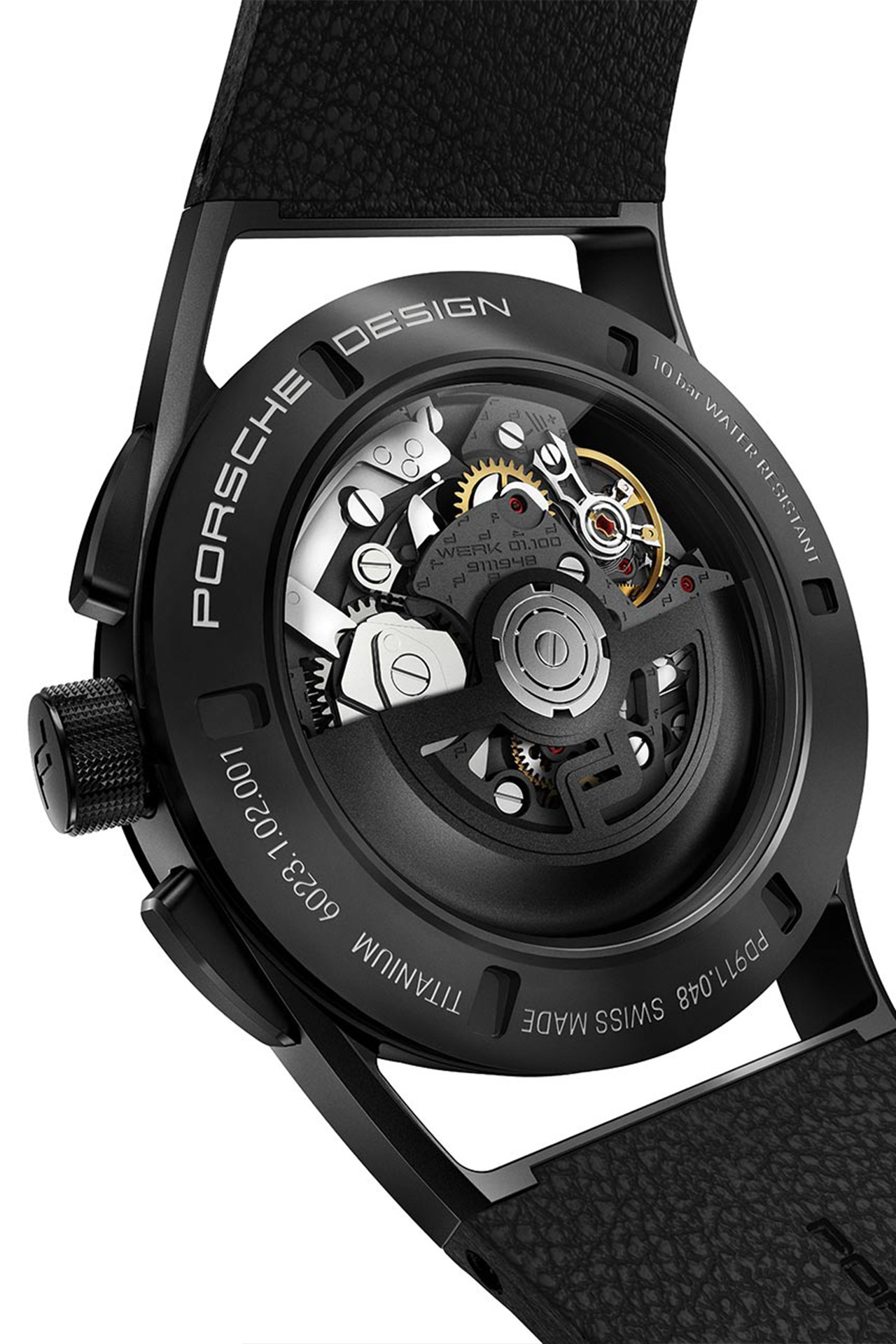
For us, the primary focus has always been the quality of our watches, with the movement at the very core. Developing our own calibres was therefore a logical step, enabling us to control the entire production process and ensure Porsche-level quality. At the same time, it allowed us to implement clearly defined criteria for our movements—for example, all Porsche Design calibres are officially certified as chronometers by the COSC.
We are honoured to receive the Red Dot Design Award: Product Design for the Porsche Design Sport Chrono Subsecond in 2021.